Alaskan Malamute
Built for blizzards. Currently redecorating your yard.
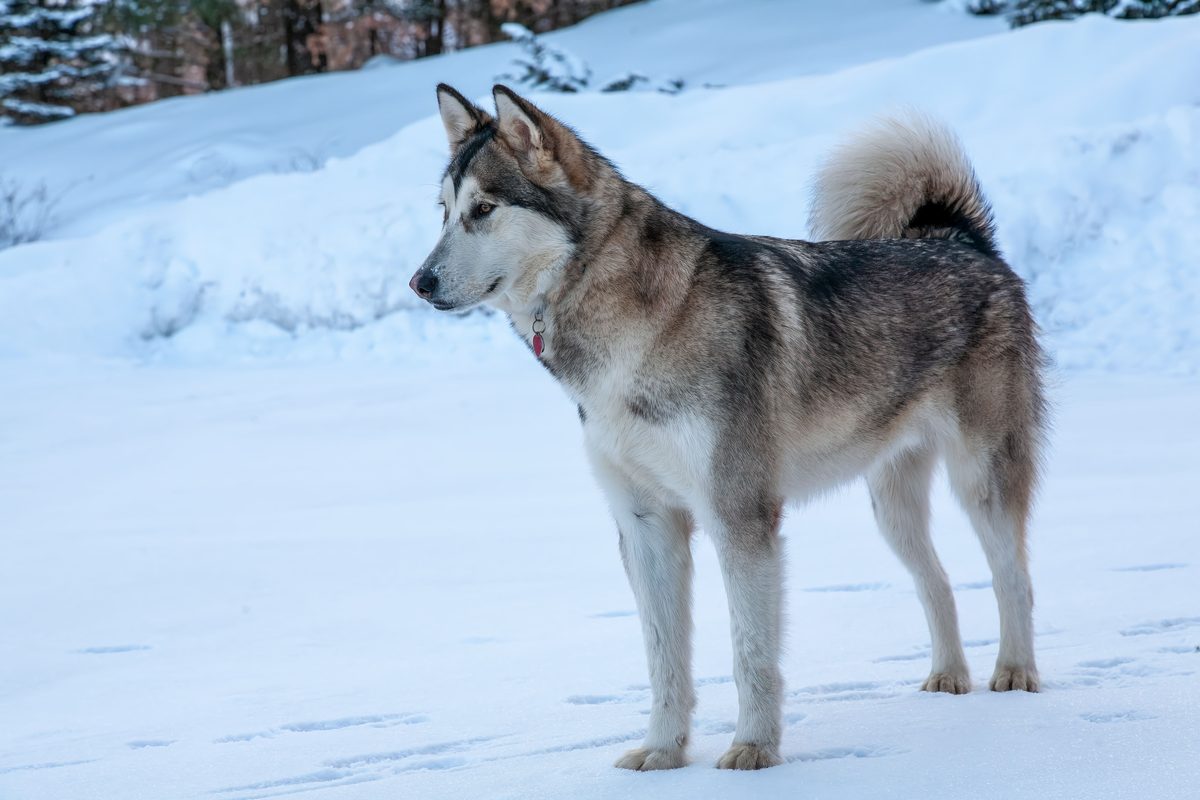
Malamutes are friendly, pack-oriented, and genuinely love people — including strangers, which makes them a poor choice if you're looking for a guard dog. They were bred to pull sleds alongside other dogs and people, and that cooperative, social instinct runs deep. They "talk" more than they bark, with a range of vocalizations closer to a howl.
They also have a strong prey drive and a well-earned reputation as escape artists. A bored Malamute will dig, climb, or otherwise find a way out of a yard that seems perfectly secure to everyone else.
Malamutes typically live 10–14 years. Hip dysplasia and hypothyroidism are both documented risks. Chondrodysplasia, a dwarfism-related condition affecting bone growth, appears in the breed's genetic history and is screened for by responsible breeders. An inherited polyneuropathy affecting nerve function has also been identified in the breed.
Bloat is a risk given body type, and their thick double coat makes heat management a real health consideration — this is not a breed built for hot climates or summer exertion.
Malamutes bred for or engaged in serious pulling work need substantially more calories than their size alone would suggest — this is a breed with genuinely high caloric needs when active. A pet Malamute getting normal exercise needs considerably less, and owners should adjust rather than assume "big dog" automatically means "feed like a sled dog."
Quality protein and fat support their coat and energy needs. Feeding and exercising with bloat precautions in mind is worth building into the routine given their build.
Malamutes are generally excellent with people, including kids, thanks to their pack-oriented, social nature. That same friendliness extends to strangers, though, so this isn't a breed to rely on for home security. High prey drive means cats and small pets are a genuine risk, not a maybe.
Secure, tall fencing is non-negotiable — this breed's reputation as an escape artist is earned, and an underestimated fence is the most common way a Malamute ends up loose.
People often confuse Malamutes with the smaller, lighter-shedding Siberian Husky and are unprepared for the size, strength, and truly massive seasonal shedding that comes with this breed. This is a big, strong dog that needs serious daily exercise and a secure yard, not a walk around the block.
If you want a dog that pulls hard, sheds constantly, howls instead of barks, and treats every stranger like a new best friend, this breed delivers all of that in full. If you wanted a guard dog or a low-shed apartment companion, look elsewhere.
How much exercise does an Alaskan Malamute need?
The Alaskan Malamute has very high physical activity needs and high mental stimulation needs.
What size is an Alaskan Malamute?
The Alaskan Malamute is a large breed.
How much grooming does an Alaskan Malamute need?
The Alaskan Malamute has high grooming needs.
Is an Alaskan Malamute easy to train?
The Alaskan Malamute is independent-minded, which can make training more challenging.
Is the Alaskan Malamute a good choice for first-time owners?
The Alaskan Malamute is generally not recommended for first-time owners.
Is an Alaskan Malamute apartment-friendly?
The Alaskan Malamute is not well suited to apartment living and does better with more space.
How long does an Alaskan Malamute live?
The Alaskan Malamute typically lives 10–14 years.
General references for further reading. For your own dog, always check with your veterinarian.